I have built a number of open source projects, including snippet shot, tailwindcss migrator, and pixlated. After building, I shared it on forums and communities, made it clear in the readme that 'contributions are welcome,' but still got zero contributions. It made me wonder what exactly I was doing wrong. I looked at these repos from outsider's perspective. I noticed that, aside from the big “contributors are welcome” message, nothing else was inviting me to contribute. From there, I discovered a few more issues as to why my project wasn’t receiving contributors.
Show how to use and setup your project
When I first shared the repo, there was nothing guiding users on how to set up the project. I had a README but it was missing installation instructions. Without this, potential contributors face unnecessary friction. If you can't get a project running, how can you contribute to it? Good installation instructions aren't just 'npm install.' They should walk through the complete setup: prerequisites, installation steps, how to run locally, and what success looks like.
Keep your project active
I have scrolled past repos countless times simply because the last activity was months ago. It subtly signals that this project isn’t active so why waste my time contributing. When I looked at my projects from that perspective, I realized I wouldn't even contribute to them if they weren't mine. You don't need daily commits, but aim for visible activity at least once a month. This could be merging a PR, updating a dependency, adding an example to your docs, or even just triaging issues. The goal isn't busywork, it's showing the project has a pulse. On Pixlated, I set a reminder to review and update something small monthly, even during quiet periods. That consistent timestamp matters more than you'd think.
Open up a few issues first.
Sometimes, people don't know how they can contribute. Be their guide. Opening a few issues paves the way for more contributors. I looked at the project and it seemed dry—maybe people didn't know where to start. Contributions on pPxlated started coming in when I opened up a few good first issues. The first issue I opened was to 'convert all project images to .webp format'. This was after running the site on page speed insights and it pointed out that performance issue. I could have done this instantly by myself but I thought, this is a good simple first issue for someone just getting started with open source contributions. Within a couple of hours, someone commented asking to be assigned. After that, I used the same strategy. I opened simple issues that wouldn't take more than 5 minutes to do. With this constant interaction, other people started opening issues. A few issues were ignored till they were further broken down in the issue description.
 It shows that people want to contribute but are confused about what they can do.
Show appreciation to your previous contributors.
Contributors aren't paid for their work, so recognition matters. Seeing your GitHub profile on a project gives contributors that dopamine hit that makes them want to return. Give people reasons to be excited: thank contributors after a successful merge or add a contributors section to your README. This appreciates past contributors and signals to new ones that their efforts will be valued.
Publicize your work
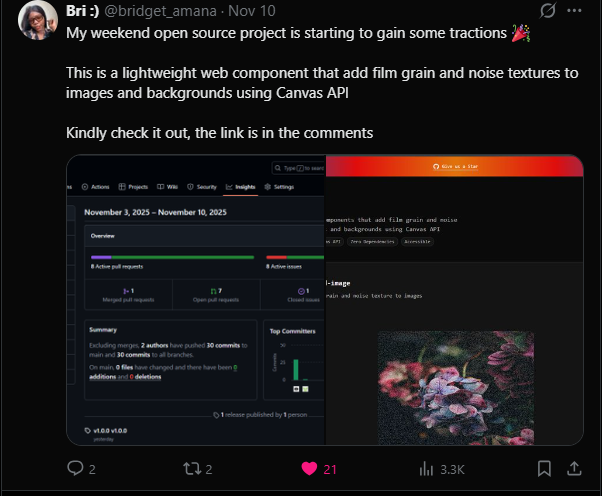
You can't contribute to what you don't know about. Contributions aren't coming in because your project is still very much hidden. Share your project on communities and social media. Announce what you're building, that it's open for contributions, and when you open new issues. I posted on Reddit and created an article on Dev.to to share the project. Neither got much traction. What actually kickstarted contributions was a Twitter post announcing good first issues. Don't constrain yourself to one platform. Twitter worked for me because I was already consistent and had followers there. It might not work for you if you're just starting out. So, go where your audience is. I didn't just stop at one post but continued giving updates regularly.
Get your project up and running first
People won't contribute to what isn't working. Project owners might think building together is part of the open source spirit, but contributors want to improve something functional, not debug a broken foundation. Get the project started on your own and show that crucial features are working. Don't build halfway with nothing visibly working and expect people to join. This doesn't mean your project needs to be feature-complete, but there should be a working core that people can clone, run, and see in action. For Pixlated, I made sure the basic image pixelation worked and the site was deployed before asking for contributions. Contributors could visit the live site, understand what it does, then look at the code to improve it. Starting with a half-built project where nothing runs yet means contributors spend their time figuring out your vision instead of improving it.
Conclusion
If your project hasn't had contributions, the first step is to audit your readme. Make sure someone can understand what it does and how to run it within 30 seconds. Then work on sharing your project to get eyes on it. The more eyes you get on it, the greater your chances of getting a contributor. The contributors are out there, you just need to make it easy for them to find and join you